 Add to Chrome
 Add to Firefox
 Add to Edge
Beyond the RF Paradigm: Rydberg Atomic Receivers for Next-Generation IoT
May 31, 2026
Next-generation Internet-of-Things (IoT) is evolving toward a ubiquitous, ultra-low-power, and multi-band heterogeneous networking paradigm that seamlessly integrates terrestrial, non-terrestrial, and ambient devices. This vision places unprecedented demands on conventional radio frequency (RF) receivers, whose fundamental bottlenecks in sensitivity, power consumption, coverage, and multi-band operation are rooted in the RF antenna. To tackle these issues, we show that the quantum properties of Rydberg atomic quantum receivers (RAQRs), including ultra-high sensitivity, broad frequency agility, and diverse reception modalities, provide a physically distinct receiver-side path that replaces the conventional antenna-and-low-noise-amplifier chain. Using LoRa, narrowband IoT, and ambient IoT as case studies, this article shows that RAQRs deliver significant gains in weak-uplink, low-power, and battery-free regimes. A stochastic-geometry analysis in cellular and cell-free architectures then maps these device-level gains onto network coverage, where the RAQR retains roughly a 4 dB half-coverage advantage over the RF receiver in sparse deployments at \(λ\sim 10^{-5}~{\mathrm m}^{-2}\), with the gain eroded as device density grows. The open challenges are presented to stand between current RAQR prototypes and deployable IoT infrastructure.

Movable-Antenna-Enhanced ISAC: Optimal Antenna Trajectory and Beamforming Design
May 22, 2026Integrated sensing and communication (ISAC) is a key enabling technology for next-generation wireless networks. However, most existing ISAC systems rely on fixed-position antennas, which restrict performance when balancing sensing and communication objectives. Movable antenna (MA) technology introduces additional spatial degrees of freedom through antenna mobility, yet existing studies on MA-enabled ISAC schemes mainly consider static antenna repositioning and fail to fully exploit this capability. By leveraging spatio-temporal sampling enabled by antenna motion, optimized MA trajectories can synthesize large virtual aperture arrays, thereby improving angular resolution and reducing sensing ambiguity. To this end, this paper investigates a dynamic MA-enabled ISAC system and studies the joint design of MA trajectories and transmit beamforming. We formulate a joint trajectory and beamforming optimization problem to minimize sensing beampattern mismatch under communication quality-of-service constraints. A branch-and-bound-based algorithm is developed to obtain the globally optimal solution. Numerical results show that the proposed framework significantly outperforms baseline schemes with only one or two antenna repositioning steps, demonstrating its practical feasibility.
Sense Smarter, Think Better: Edge Perception for Next-Generation Networks
May 18, 2026Edge perception has emerged as a foundational capability for future wireless networks, enabling the network edge to proactively sense, interpret, and interact with the physical environment in a task-oriented and resource-aware manner. This survey provides a comprehensive and structured overview of edge perception. We first review representative sensing modalities and edge artificial intelligence (AI) techniques as the fundamental building blocks. We then examine their synergistic interactions. We systematically analyze how edge AI enhances sensing capabilities, encompassing both in-band and out-of-band modalities, as well as multi-modal sensor data fusion. Moreover, we discuss the role of task-driven sensing in facilitating edge AI, including integrated sensing-communication-computation designs, and active perception frameworks that dynamically adapt sensing strategies for downstream applications. Finally, we identify key challenges and open issues. By consolidating fragmented research across sensing, communication, and edge AI, this survey provides forward-looking insights for the design and implementation of edge perception systems for sixth-generation (6G) networks.
Low-Complexity Multi-Agent Continual Learning for Stacked Intelligent Metasurface-Assisted Secure Communications
Feb 02, 2026Stacked intelligent metasurfaces (SIMs), composed of multiple layers of reconfigurable transmissive metasurfaces, are gaining prominence as a transformative technology for future wireless communication security. This paper investigates the integration of SIM into multi-user multiple-input multiple-output (MIMO) systems to enhance physical layer security. A novel system architecture is proposed, wherein each base station (BS) antenna transmits a dedicated single-user stream, while a multi-layer SIM executes wave-based beamforming in the electromagnetic domain, thereby avoiding the need for complex baseband digital precoding and significantly reducing hardware overhead. To maximize the weighted sum secrecy rate (WSSR), we formulate a joint precoding optimization problem over BS power allocation and SIM phase shifts, which is high-dimensional and non-convex due to the complexity of the objective function and the coupling among optimization variables. To address this, we propose a manifold-enhanced heterogeneous multi-agent continual learning (MHACL) framework that incorporates gradient representation and dual-scale policy optimization to achieve robust performance in dynamic environments with high demands for secure communication. Furthermore, we develop SIM-MHACL (SIMHACL), a low-complexity learning template that embeds phase coordination into a product manifold structure, reducing the exponential search space to linear complexity while maintaining physical feasibility. Simulation results validate that the proposed framework achieves millisecond-level per-iteratio ntraining in SIM-assisted systems, significantly outperforming various baseline schemes, with SIMHACL achieving comparable WSSR to MHACL while reducing computation time by 30\%.
HPTune: Hierarchical Proactive Tuning for Collision-Free Model Predictive Control
Jan 29, 2026Parameter tuning is a powerful approach to enhance adaptability in model predictive control (MPC) motion planners. However, existing methods typically operate in a myopic fashion that only evaluates executed actions, leading to inefficient parameter updates due to the sparsity of failure events (e.g., obstacle nearness or collision). To cope with this issue, we propose to extend evaluation from executed to non-executed actions, yielding a hierarchical proactive tuning (HPTune) framework that combines both a fast-level tuning and a slow-level tuning. The fast one adopts risk indicators of predictive closing speed and predictive proximity distance, and the slow one leverages an extended evaluation loss for closed-loop backpropagation. Additionally, we integrate HPTune with the Doppler LiDAR that provides obstacle velocities apart from position-only measurements for enhanced motion predictions, thus facilitating the implementation of HPTune. Extensive experiments on high-fidelity simulator demonstrate that HPTune achieves efficient MPC tuning and outperforms various baseline schemes in complex environments. It is found that HPTune enables situation-tailored motion planning by formulating a safe, agile collision avoidance strategy.
Robust and Secure Blockage-Aware Pinching Antenna-assisted Wireless Communication
Jan 10, 2026In this work, we investigate a blockage-aware pinching antenna (PA) system designed for secure and robust wireless communication. The considered system comprises a base station equipped with multiple waveguides, each hosting multiple PAs, and serves multiple single-antenna legitimate users in the presence of multi-antenna eavesdroppers under imperfect channel state information (CSI). To safeguard confidential transmissions, artificial noise (AN) is deliberately injected to degrade the eavesdropping channels. Recognizing that conventional linear CSI-error bounds become overly conservative for spatially distributed PA architectures, we develop new geometry-aware uncertainty sets that jointly characterize eavesdroppers position and array-orientation errors. Building upon these sets, we formulate a robust joint optimization problem that determines per-waveguide beamforming and AN covariance, individual PA power-ratio allocation, and PA positions to maximize the system sum rate subject to secrecy constraints. The highly non-convex design problem is efficiently addressed via a low computational complexity iterative algorithm that capitalizes on block coordinate descent, penalty-based methods, majorization-minimization, the S-procedure, and Lipschitz-based surrogate functions. Simulation results demonstrate that sum rates for the proposed algorithm outperforms conventional fixed antenna systems by 4.7 dB, offering substantially improved rate and secrecy performance. In particular, (i) adaptive PA positioning preserves LoS to legitimate users while effectively exploiting waveguide geometry to disrupt eavesdropper channels, and (ii) neglecting blockage effects in the PA system significantly impacts the system design, leading to performance degradation and inadequate secrecy guarantees.
Detection in Bistatic ISAC with Deterministic Sensing and Gaussian Information Signals
Nov 14, 2025Integrated sensing and communications (ISAC) is a disruptive technology enabling future sixth-generation (6G) networks. This paper investigates target detection in a bistatic ISAC system, in which the base station (BS) transmits superimposed ISAC signals comprising both Gaussian information-bearing and deterministic sensing components to simultaneously provide communication and sensing functionalities. First, we develop a Neyman-Pearson (NP)-based detector that effectively utilizes both the deterministic sensing and random communication signals. Closed-form analysis reveals that both signal components contribute to improving the overall detection performance. Subsequently, we optimize the BS transmit beamforming to maximize the detection probability, subject to a minimum signal-to-interference-plus-noise ratio (SINR) constraint for the communication user (CU) and a total transmit power budget at the BS. The resulting non-convex beamforming optimization problem is addressed via semi-definite relaxation (SDR) and successive convex approximation (SCA) techniques. Simulation results demonstrate the superiority of the proposed NP-based detector, which leverages both types of signals, over benchmark schemes that treat information signals as interference. They also reveal that a higher communication-rate threshold directs more transmit power to Gaussian information-bearing signals, thereby diminishing deterministic-signal power and weakening detection performance.
Planning Oriented Integrated Sensing and Communication
Oct 27, 2025Integrated sensing and communication (ISAC) enables simultaneous localization, environment perception, and data exchange for connected autonomous vehicles. However, most existing ISAC designs prioritize sensing accuracy and communication throughput, treating all targets uniformly and overlooking the impact of critical obstacles on motion efficiency. To overcome this limitation, we propose a planning-oriented ISAC (PISAC) framework that reduces the sensing uncertainty of planning-bottleneck obstacles and expands the safe navigable path for the ego-vehicle, thereby bridging the gap between physical-layer optimization and motion-level planning. The core of PISAC lies in deriving a closed-form safety bound that explicitly links ISAC transmit power to sensing uncertainty, based on the Cram\'er-Rao Bound and occupancy inflation principles. Using this model, we formulate a bilevel power allocation and motion planning (PAMP) problem, where the inner layer optimizes the ISAC beam power distribution and the outer layer computes a collision-free trajectory under uncertainty-aware safety constraints. Comprehensive simulations in high-fidelity urban driving environments demonstrate that PISAC achieves up to 40% higher success rates and over 5% shorter traversal times than existing ISAC-based and communication-oriented benchmarks, validating its effectiveness in enhancing both safety and efficiency.
Coordinated Beamforming for Networked Integrated Communication and Multi-TMT Localization
Oct 06, 2025Networked integrated sensing and communication (ISAC) has gained significant attention as a promising technology for enabling next-generation wireless systems. To further enhance networked ISAC, delegating the reception of sensing signals to dedicated target monitoring terminals (TMTs) instead of base stations (BSs) offers significant advantages in terms of sensing capability and deployment flexibility. Despite its potential, the coordinated beamforming design for networked integrated communication and time-of-arrival (ToA)-based multi-TMT localization remains largely unexplored. In this paper, we present a comprehensive study to fill this gap. Specifically, we first establish signal models for both communication and localization, and, for the first time, derive a closed-form Cram\'er-Rao lower bound (CRLB) to characterize the localization performance. Subsequently, we exploit this CRLB to formulate two optimization problems, focusing on sensing-centric and communication-centric criteria, respectively. For the sensing-centric problem, we develop a globally optimal algorithm based on semidefinite relaxation (SDR) when each BS is equipped with more antennas than the total number of communication users. While for the communication-centric problem, we design a globally optimal algorithm for the single-BS case using bisection search. For the general case of both problems, we propose a unified successive convex approximation (SCA)-based algorithm, which is suboptimal yet efficient, and further extend it from single-target scenarios to more practical multi-target scenarios. Finally, simulation results demonstrate the effectiveness of our proposed algorithms, reveal the intrinsic performance trade-offs between communication and localization, and further show that deploying more TMTs is always preferable to deploying more BSs in networked ISAC systems.
Low-Altitude UAV Tracking via Sensing-Assisted Predictive Beamforming
Sep 16, 2025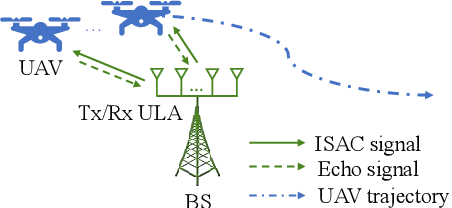
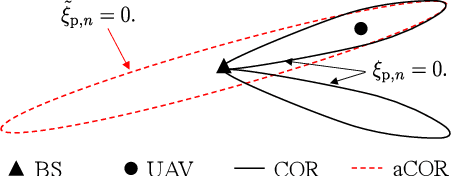
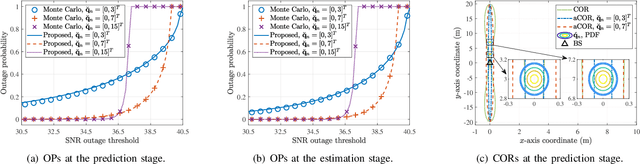
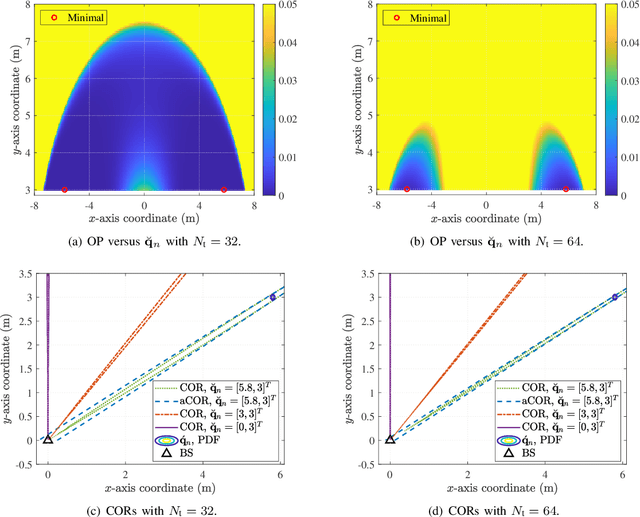
Sensing-assisted predictive beamforming, as one of the enabling technologies for emerging integrated sensing and communication (ISAC) paradigm, shows significant promise for enhancing various future unmanned aerial vehicle (UAV) applications. However, current works predominately emphasized on spectral efficiency enhancement, while the impact of such beamforming techniques on the communication reliability was largely unexplored and challenging to characterize. To fill this research gap and tackle this issue, this paper investigates outage capacity maximization for UAV tracking under the sensing-assisted predictive beamforming scheme. Specifically, a cellular-connected UAV tracking scheme is proposed leveraging extended Kalman filtering (EKF), where the predicted UAV trajectory, sensing duration ratio, and target constant received signal-to-noise ratio (SNR) are jointly optimized to maximize the outage capacity at each time slot. To address the implicit nature of the objective function, closed-form approximations of the outage probabilities (OPs) at both prediction and measurement stages of each time slot are proposed based on second-order Taylor expansions, providing an efficient and full characterization of outage capacity. Subsequently, an efficient algorithm is proposed based on a combination of bisection search and successive convex approximation (SCA) to address the non-convex optimization problem with guaranteed convergence. To further reduce computational complexity, a second efficient algorithm is developed based on alternating optimization (AO). Simulation results validate the accuracy of the derived OP approximations, the effectiveness of the proposed algorithms, and the significant outage capacity enhancement over various benchmarks, while also indicating a trade-off between decreasing path loss and enjoying wide beam coverage for outage capacity maximization.